Coming of Age: What Sullivans Cove's 25-Year-Old Tells Us About New World Whisky's Place in a Collection
Whisky
Portfolio
Strategy
⊹
Jan 23, 2026
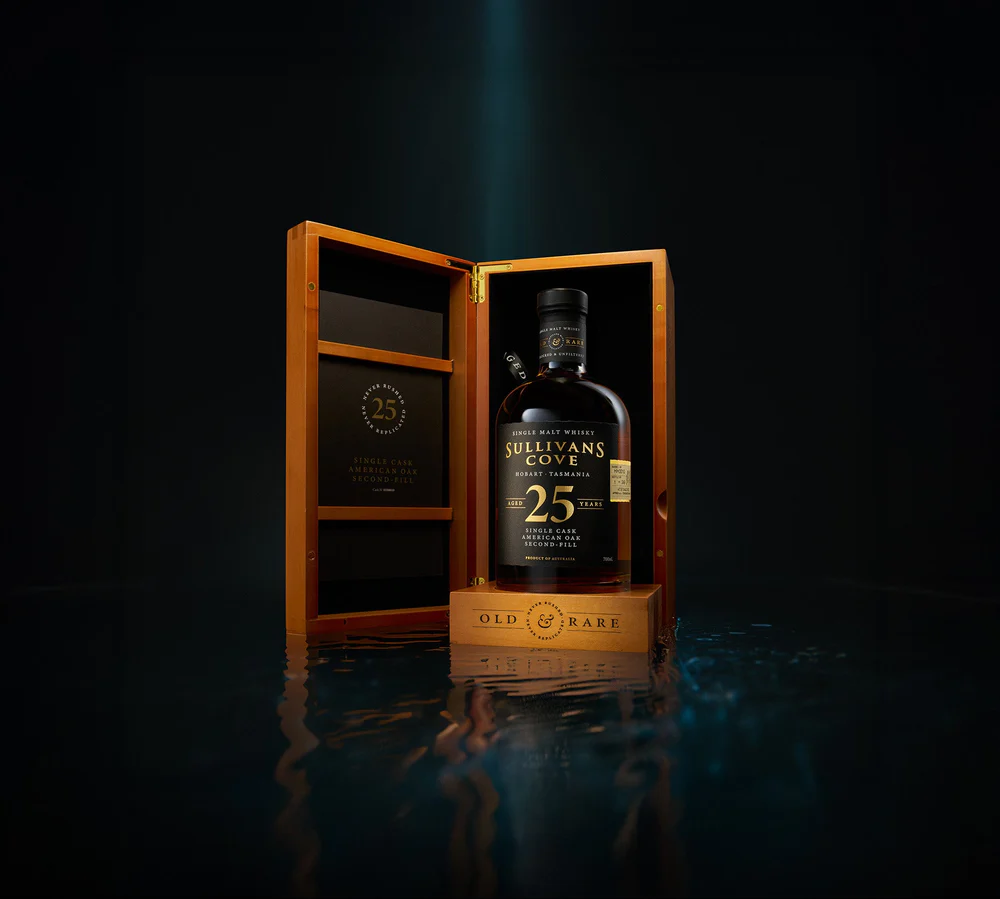
New World whisky is on a journey of maturation. Distilleries in Australia, Taiwan, India and beyond are now producing spirits that compete with, and occasionally surpass the quality of those from Scotland, Japan, Ireland and the United States. In October 2025, Sullivans Cove released its 25-Year-Old single cask, the oldest single malt ever bottled in Australia and believed to be the oldest from any continuously operating, dedicated new-world whisky distillery. Two expressions were released: Cask HH0056, yielding just 134 bottles available by invitation only, and Cask HH0010, with 349 bottles allocated by ballot. For collectors, this is not merely a product launch. It is a marker of a moment in time.
The established whisky categories carry undeniable weight. Scotch, Japanese, Irish and American whisky each benefit from legislative frameworks that define production standards and enforce quality controls. The Scotch Whisky Act, the strict geographical and production requirements governing Japanese whisky, the pot still regulations in Ireland, and the rules that distinguish bourbon from Tennessee whiskey: these mechanisms create clarity for consumers and collectors alike. They also constrain innovation. Producers within these frameworks cannot easily experiment with grains, cask types, or production methods without risking their classification. New World producers face no such constraints. They can draw on centuries of accumulated knowledge and expertise from the traditional categories while remaining free to innovate, adapt to local conditions, and define their own identity. The question for collectors is whether this freedom will set new, competitive standards and add value to their portfolios.
It does, but only when the producer's credentials, the liquid's quality, and the release's significance align. A carefully selected New World whisky can serve as both a marker of the category's evolution and a strategic diversification play. Sullivans Cove's 25-Year-Old is precisely such a release.
The Archetype of a Collectible New World Producer
Sullivans Cove was founded in Tasmania in 1994, making it one of the pioneers of modern Australian whisky. For much of its early history, the distillery operated in obscurity, refining its processes and laying down stock with no guarantee that Australian whisky would ever command international attention. That changed in 2014, when its French Oak Cask HH0525 was named World's Best Single Malt at the World Whiskies Awards. It was the first time a distillery outside Scotland or Japan had won the category. The judges, reportedly sceptical, travelled to Tasmania to see the operation for themselves.
The 2014 win was not a fluke. In 2018, Sullivans Cove won World's Best Single Cask Single Malt for its American Oak expression. In 2019, it won the same award again for its French Oak, becoming the only distillery in the world to win the category twice. These accolades established Sullivans Cove as Australia's most decorated whisky producer and, more importantly, demonstrated that consistent excellence was achievable outside the traditional whisky heartlands.
The distillery's production philosophy aligns with collectability. Every release is a single cask bottling, allocated by ballot to the distillery's mailing list. There are no bulk releases, no shortcuts, no compromises on timing. The sensory panel tastes each cask repeatedly over the years to determine optimal bottling. The 25-year-old, for instance, was sampled 19 times in its final three years alone. This is a distillery with three decades of continuous operation, consistent critical recognition, and a clear commitment to quality over volume. For collectors seeking New World whisky, these are the credentials that matter.
A Defining Marker of New World Whisky's Maturation
The significance of the 25-Year-Old extends beyond its age statement. It is the oldest Australian single malt ever bottled and is believed to be the oldest from any continuously operating, dedicated New World whisky distillery. The casks were laid down in 1999 by Patrick Maguire, then distillery manager and later owner, during the nascent years of Australian whisky. At the time, no one expected quarter-century maturation to be achievable in Australia. The continent's climate strongly suggested accelerated ageing conditions, not one of patience.
Tasmania proved otherwise. Profoundly influenced by the Southern Ocean, the island's cool maritime climate is more akin to Scotland than to mainland Australia, which allowed the spirit to develop slowly and harmoniously. Sullivans Cove's exclusive use of full-size casks, rather than the smaller barrels that accelerate maturation, contributed to the result. As distillery manager Heather Tillott noted, the whisky represents 'a profound display of age and character, and an enduring piece of Tasmanian and global whisky history'.
The release comprises just 483 bottles across both casks. Cask HH0010, the ballot release, is a sibling barrel to the legendary HH0525, the French Oak expression that won World's Best Single Malt in 2014. That connection to the bottle that put Australian whisky on the global map adds a layer of narrative significance. As Whisky Magazine observed, the release represents 'a significant moment in the coming of age of New World whisky, offering a first taste of high-age statement single malt from non-traditional whisky regions'. For collectors, such releases serve as structural anchors: bottles that define a category's trajectory and mark inflection points in whisky history.
Freedom from Constraint, Built on Tradition
The legislative frameworks that govern established whisky categories serve important purposes. They protect geographical indications, maintain production standards, and provide consumers with assurance of authenticity. But they also impose limits. Scotch whisky must be matured for a minimum of three years in oak casks in Scotland. Bourbon must be made from at least 51% corn and aged in new charred oak barrels. Japanese whisky regulations, tightened in 2021, now require domestic distillation and maturation. These rules preserve tradition but inhibit experimentation.
New World producers operate without such constraints. They inherit centuries of distilling knowledge, drawing on Scottish techniques, American barrel practices, and Japanese precision, while remaining free to adapt. Australian distillers use locally grown barley and collaborate extensively with the country's wine industry on cask selection. Finishes in Barossa shiraz, Yarra Valley chardonnay, and Tasmanian tawny casks are common. Taiwanese producers like Kavalan have demonstrated that subtropical climates, once thought unsuitable for whisky, can produce world-class spirits through accelerated but carefully managed maturation. Indian producers, including Amrut, Paul John and Indri, are building international reputations rapidly; Indri's Diwali Collector's Edition was named World's Best Whisky at the 2024 World Whiskies Awards.
This is not a rejection of tradition. It is an expansion of what whisky can be. New World producers are not bound by the past, but they are informed by it. The result is a category that offers collectors something the established regions cannot: diversity of approach, freedom of expression, and exposure to the next chapter of whisky's global story.
A Place in the Collection
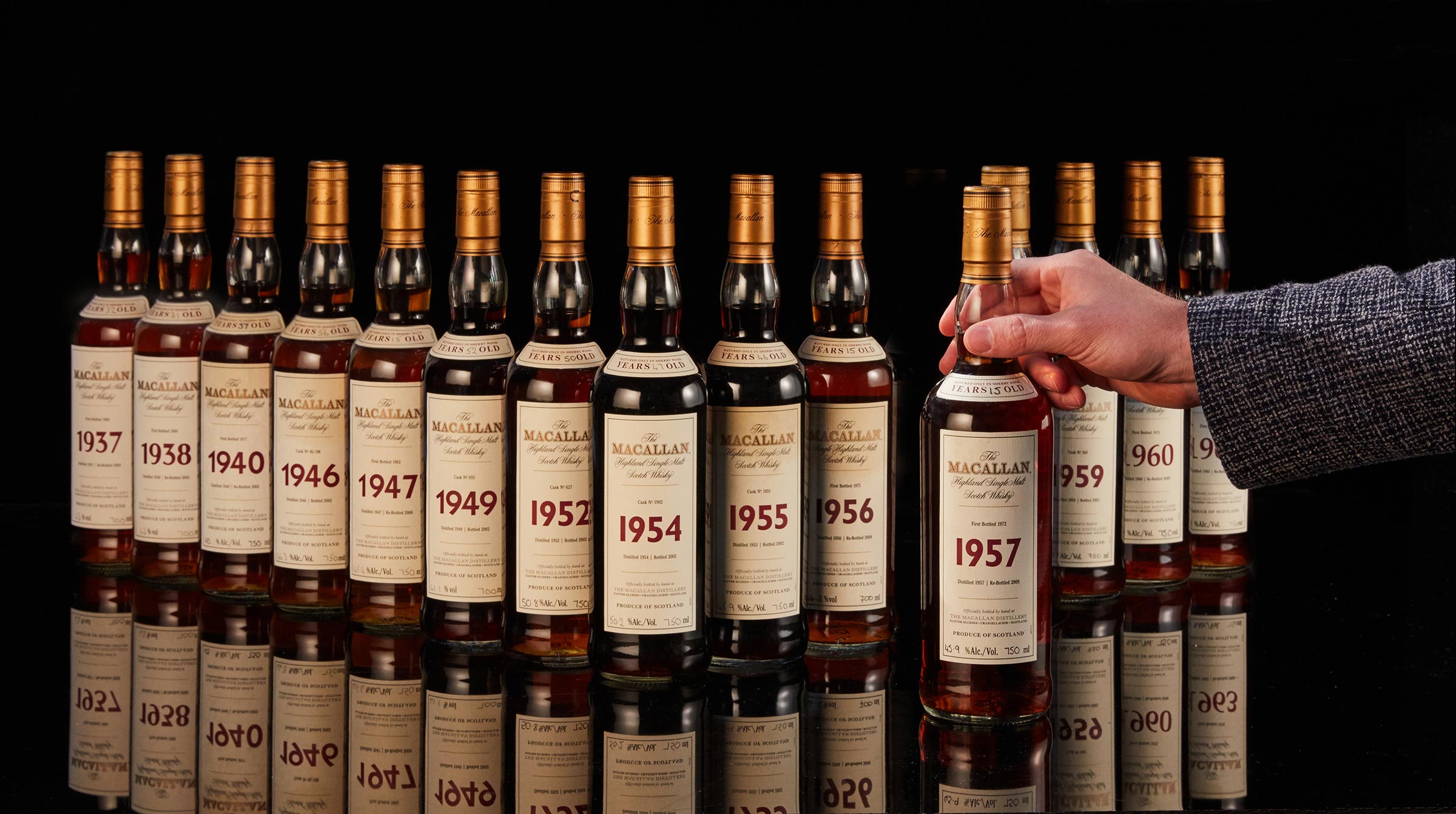
Collections benefit from structure, and structure comes from pieces that mark moments in time. A first growth Bordeaux from a legendary vintage. A Macallan from the first distillation run at the new distillery. A Cognac distilled in the 1800’s, marking the last era of grape harvests before vineyards across Europe were devastated by Phylloxera. These bottles anchor a collection, providing reference points that give meaning to the surrounding holdings.
Sullivans Cove's 25-Year-Old belongs in this company. It is the oldest Australian single malt, from a distillery with three decades of proven excellence, released at the moment when New World whisky is coming of age. It does not replace Scotch, Japanese, Irish or American whisky in a collection. It complements them, capturing an inflection point in the category's history that future collectors will look back on as definitive.
The producers establishing their reputations now will be the benchmarks against which future New World distilleries are measured. Collectors who recognise quality early and select producers with the credentials to endure may find themselves holding the next generation's most sought-after whisky. Sullivans Cove has earned its place at the front of that queue.
Sources
Sullivans Cove official release materials (October 2025)
Whisky Magazine, 'Major milestone for world whisky' (November 2025)
The Whisky Club, Sullivans Cove 25 Year Old Single Cask HH0010 product notes
Broadsheet, 'Thirty Years On, Sullivans Cove Whisky Is Better Than Ever' (October 2024)
The Spirits Business; Drinks Trade; Wine Industry Advisor
Distill Ventures, 'Growth and opportunity for New World whisky'
WhiskyInvestDirect, 'New World Malts' (May 2025)
Share This Article